From here on, you will be linked to Nomura Co., Ltd. 's partner page. You can apply from the list of available positions at the link. (Please note that CIC may not always be recruiting.)
![CIC [Content Integration Center] Fantasy Implementation Group](/wp-content/uploads/2024/10/ciclogo-w.svg)


CIC NOTE
2026. 02-27
Ryoma Kaga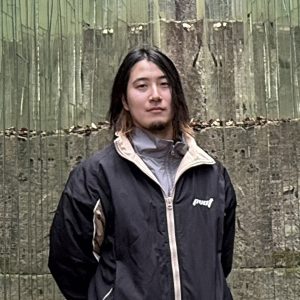
Nice to meet you. I'm Kaga, a second-year CIC planner.
I usually plan and create experiences that include digital content.
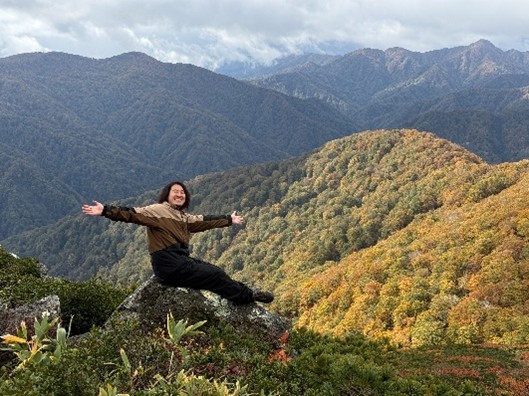
Recently, I have had more opportunities to go into the mountains to shoot videos.
With the weather and on-site conditions changing every time, I realize that I need to hone my knowledge of what to look at.
By borrowing the perspectives of the photographer and guide, I was able to break down the sensations I couldn't put into words into "conditions" and re-examine them, which helped me to improve the resolution of my perspective. Here, I will summarize what I learned in three points.
What bothered me was not being able to put into words the true nature of the feeling that "today looks good" or "today looks tough."
As I continued to visit the same mountain, a guide told me, "The mountain is alive."
The light, humidity, vegetation, etc. in the forest change little by little, and the more you repeat the experience, the more you can see the differences from the last time.
And the changes cannot be seen by simply looking.
That's why we needed to increase the resolution.
From my conversations with the photographer and guide, I've summarized three perspectives that I found particularly informative.
What photographers often did was to look at the photo in a way that "compared it to the previous one."
Rather than chasing the whole picture, have a reference point to compare it to.
・A place where you always stop
・A tree that catches my eye
・Wind paths and slopes that make you want to look up
Having a standard prevents changes from becoming ambiguous and provides a basis for judgment.
Even at work, the more you have a reference point for making decisions, the more the conversation will move forward. I feel that way.
What impressed me about the guide's talk was that he didn't generalize the situation.
If we simply summarise things as "because it's a mountain" or "because of the weather", we won't understand anything. That's why we separate them by conditions.
For example, even with the weather, is it clouds, wind, rain, or the direction of the light?
By dividing the conditions, we can see the true nature of "Today looks tough."
At work, I feel that the more I can break down the factors, the more concrete my next move becomes.
Sometimes you can understand something in one go, but the real picture only emerges after repeated attempts.
The more you visit the same mountain, the more you will accumulate ``differences from the previous time'' and be able to read the scenery as ``information.''
What the guide was talking about based on his many years of experience gradually became a reality for me.
At work, I think accumulating differences will increase the reproducibility of judgments.
・ Place a reference point: Decide on a comparison target and visualize the "change"
・ Divide by conditions: Don't just say "because of ____", but break down the factors and think about them
・ Accumulate the difference: Don't make a decision in one go, record the difference from the previous time and improve the accuracy of your decision
What I gained from climbing the mountain was not words to describe the "charm of the mountain," but rather
It was the precision of perspective when facing uncertain situations = resolution.
With the help of the photographer and guide,
Unravel your inner senses, divide them into conditions, compare them, and accumulate the differences.
I would like to cultivate this perspective in my work and in my daily life.